Hydraulic systems are essential in many industries, including manufacturing, agriculture, construction, and industrial machinery. One important component in these systems is the
Dowty gear pump, a hydraulic pump associated with the Dowty name and widely recognized in industrial hydraulic applications.
Hydraulic pumps can represent a significant investment, especially when equipment requires specific models or replacement components. However, replacing a worn pump with a completely new unit is not always the most economical solution.
In many cases, used hydraulic pumps can be inspected, repaired, refurbished, or resold. This creates opportunities for businesses to reduce maintenance expenses while recovering value from existing equipment.
Understanding how these pumps work and how they can be reused is important for companies looking to improve operational efficiency and control costs.
What Is a Dowty Gear Pump?
A Dowty gear pump is a type of positive-displacement hydraulic pump that uses rotating gears to move hydraulic fluid through a system.
Gear pumps are commonly used in applications requiring a consistent supply of pressurized hydraulic oil.
Their relatively simple mechanical design makes them suitable for various industrial environments.
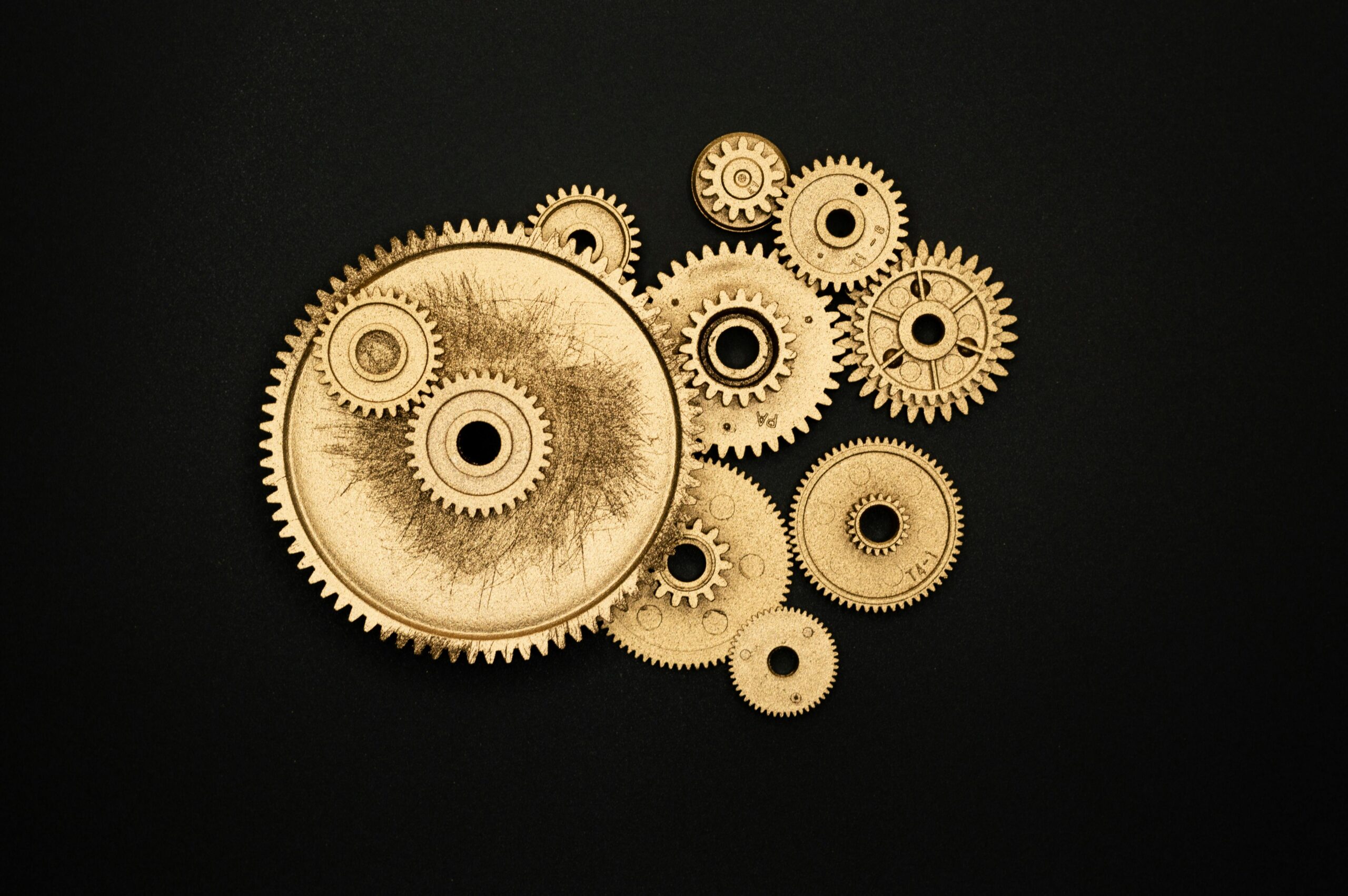
A typical external gear pump contains two meshing gears inside a closely fitted housing.
As the gears rotate, hydraulic fluid enters the inlet, travels around the outside of the gears, and exits through the outlet.
The pump creates fluid flow, while resistance in the hydraulic system generates pressure.
Different pump models have specific operating limits, displacement capacities, and installation requirements.
How Does a Dowty Gear Pump Work Technically?
The operating principle of a Dowty gear pump is based on mechanical displacement.
An external power source, usually an electric motor or combustion engine, drives the pump shaft.
This rotates the driving gear, which engages a second gear.
As the gear teeth separate near the inlet, the available volume increases, allowing hydraulic fluid to enter.
The fluid is carried around the housing between the gear teeth and the pump casing.
When the gears mesh again near the outlet, the available volume decreases and forces fluid into the hydraulic circuit.
Internal clearances are important because excessive wear can increase leakage and reduce efficiency.
Proper lubrication and clean hydraulic fluid are therefore essential for reliable operation.
Why Can a Dowty Gear Pump Be Expensive to Replace?
Replacing a hydraulic pump involves more than purchasing the component itself.
Businesses may also face installation costs, transport expenses, and production downtime.
Older machinery can create additional challenges because certain pump configurations may no longer be readily available.
Finding a compatible replacement may require specialist knowledge.
In some situations, modifying the hydraulic installation to accept a different pump can increase costs.
This is why businesses often investigate whether an existing Dowty gear pump can be repaired before ordering a new unit.
If the main components remain serviceable, refurbishment may offer a financially attractive alternative.
Dowty Gear Pump Refurbishment as a Cost-Saving Strategy
Refurbishment involves restoring a used pump to a suitable operating condition.
The process typically begins with disassembly and detailed inspection.
Technicians examine gears, shafts, bearings, seals, and internal housing surfaces for damage or wear.
Components that do not meet the required specifications may be replaced.
Reusable parts are cleaned and inspected before reassembly.
After refurbishment, the pump should undergo appropriate performance and leakage testing.
The financial benefit depends on the pump's condition, replacement-part availability, and labor costs.
When refurbishment is technically feasible, businesses may avoid purchasing a completely new pump.
How Much Money Can Be Saved by Reusing a Dowty Gear Pump?
The potential savings vary considerably between applications.
A relatively simple repair involving seals or bearings may cost substantially less than purchasing a new pump.
More extensive refurbishment involving damaged gears or housing components can be more expensive.
Businesses should compare the complete refurbishment cost with the price of a suitable replacement.
This comparison should include testing, transport, installation, warranty conditions, and expected service life.
Downtime is another important factor.
If refurbishment takes longer than sourcing a replacement, lost production may reduce the financial advantage.
The most economical choice is therefore based on total ownership costs rather than purchase price alone.
Selling a Used Dowty Gear Pump for Additional Revenue
Companies sometimes store hydraulic components that are no longer needed.
These parts may come from dismantled machinery, equipment upgrades, or discontinued production lines.
Instead of allowing them to remain unused, businesses can investigate resale opportunities.
A used Dowty gear pump may have value to equipment repair companies, hydraulic specialists, or businesses maintaining older machinery.
Its resale potential depends on identification, condition, compatibility, and market demand.
Providing accurate model numbers, photographs, and available operating history can make the component easier to evaluate.
Even a nonworking pump may contain usable parts, although its value will usually be lower than that of a tested unit.
Dowty Gear Pump Spare Parts and Their Reuse Potential
A hydraulic gear pump contains several mechanical components that may retain value.
Depending on their condition, shafts, gears, housings, covers, and other components may be candidates for reuse.
Some parts can be cleaned and inspected for installation in compatible equipment.
Others may require machining or specialist refurbishment.
However, not every component can safely be reused.
Damaged gear teeth, excessive internal wear, cracked housings, or compromised shaft surfaces can make reuse unsuitable.
Replacement seals and other wear components may also be necessary.
Professional inspection is essential because small dimensional differences can significantly affect hydraulic performance.
How to Evaluate a Used Dowty Gear Pump Before Reuse
Before purchasing or reinstalling a used pump, its technical condition should be assessed.
The first step is to identify the exact model and relevant specifications.
Important details include displacement, rotation direction, shaft configuration, mounting dimensions, and operating pressure limits.
The housing should be checked for cracks, corrosion, and external damage.
Technicians should also inspect the shaft and internal components for excessive wear.
Where possible, the pump should be tested under controlled operating conditions.
Flow, pressure, leakage, noise, and temperature can provide useful information about its condition.
A pump that looks acceptable externally may still have significant internal wear.
Industrial Applications for a Reused Dowty Gear Pump
Refurbished hydraulic gear pumps can potentially be used in various industrial environments.
Agricultural machinery may require hydraulic power for lifting and positioning equipment.
Manufacturing facilities use hydraulic systems in presses, production equipment, and material-handling machinery.
Construction equipment also relies on hydraulic components for numerous mechanical functions.
However, a reused Dowty gear pump must be compatible with the intended application.
Matching the physical mounting arrangement is not sufficient.
Operating speed, fluid compatibility, pressure limits, and required flow must also be considered.
A pump should never be installed in a system that exceeds its rated operating conditions.
Dowty Gear Pump Reuse and the Circular Economy
Reusing industrial components supports the principles of a circular economy.
Instead of discarding equipment after its first service life, businesses can investigate repair, refurbishment, and component recovery.
Hydraulic pumps contain metals and precision-machined parts that require energy and resources to manufacture.
Extending their useful life can reduce the demand for newly manufactured components.
It may also reduce industrial waste.
However, environmental benefits depend on the specific refurbishment process and the efficiency of the reused equipment.
A severely worn pump may waste energy through internal leakage.
Therefore, reuse should combine resource efficiency with appropriate technical performance.
Common Problems That Affect Dowty Gear Pump Reuse
Not every used pump is a suitable candidate for refurbishment.
One common problem is excessive internal wear, which reduces volumetric efficiency.
Contaminated hydraulic oil can also damage gears, bearings, and housing surfaces.
Cavitation, insufficient inlet supply, and operation beyond rated limits may cause additional damage.
Leaks around seals and connections can indicate maintenance requirements.
Before reusing a pump, technicians should identify the original cause of failure.
Otherwise, the refurbished component may experience the same problem after reinstallation.
Correct filtration, fluid selection, and operating conditions are essential for achieving a satisfactory service life.
How Businesses Can Build a Dowty Gear Pump Reuse Strategy
Companies operating multiple hydraulic machines can benefit from a structured approach to component management.
Instead of immediately discarding failed pumps, maintenance teams can separate them for technical assessment.
Each component should be identified and documented.
Repairable pumps can be sent to qualified hydraulic specialists, while unsuitable units can be evaluated for spare parts or material recycling.
Businesses may also maintain a small inventory of tested refurbished components.
This can help reduce waiting times when compatible equipment requires maintenance.
Accurate documentation is important to prevent the installation of unsuitable or untested pumps.
A systematic process makes it easier to understand the financial value of recovered equipment.
Dowty Gear Pump – Turning Used Hydraulic Equipment into Financial Value
A Dowty gear pump can remain a valuable industrial component even after its original installation has been dismantled or upgraded.
Through professional inspection, repair, and refurbishment, some pumps can be returned to service rather than replaced.
This can help businesses reduce equipment expenses, recover value from unused inventory, and potentially limit production downtime.
Used pumps may also create resale opportunities, particularly when they are compatible with machinery that remains in operation.
However, financial savings should always be balanced against technical condition, safety, testing costs, and expected reliability.
By treating hydraulic components as recoverable assets rather than disposable equipment, businesses can make better use of their existing resources.
A carefully managed Dowty gear pump reuse strategy can therefore support both cost control and more responsible industrial equipment management.